Most brands sell the majority of their products somewhere they can't see. Online sales made up only about 17% of total U.S. retail sales in Q2 2026, according to the U.S. Census Bureau, and about one-fifth of U.S. grocery spending, according to NielsenIQ. Even online, EMARKETER estimates that brands' own sites capture less than 20% of U.S. ecommerce sales. The rest happens at retailers and marketplaces like Walmart, Target, and Amazon (and many brands don't sell on their own site at all).
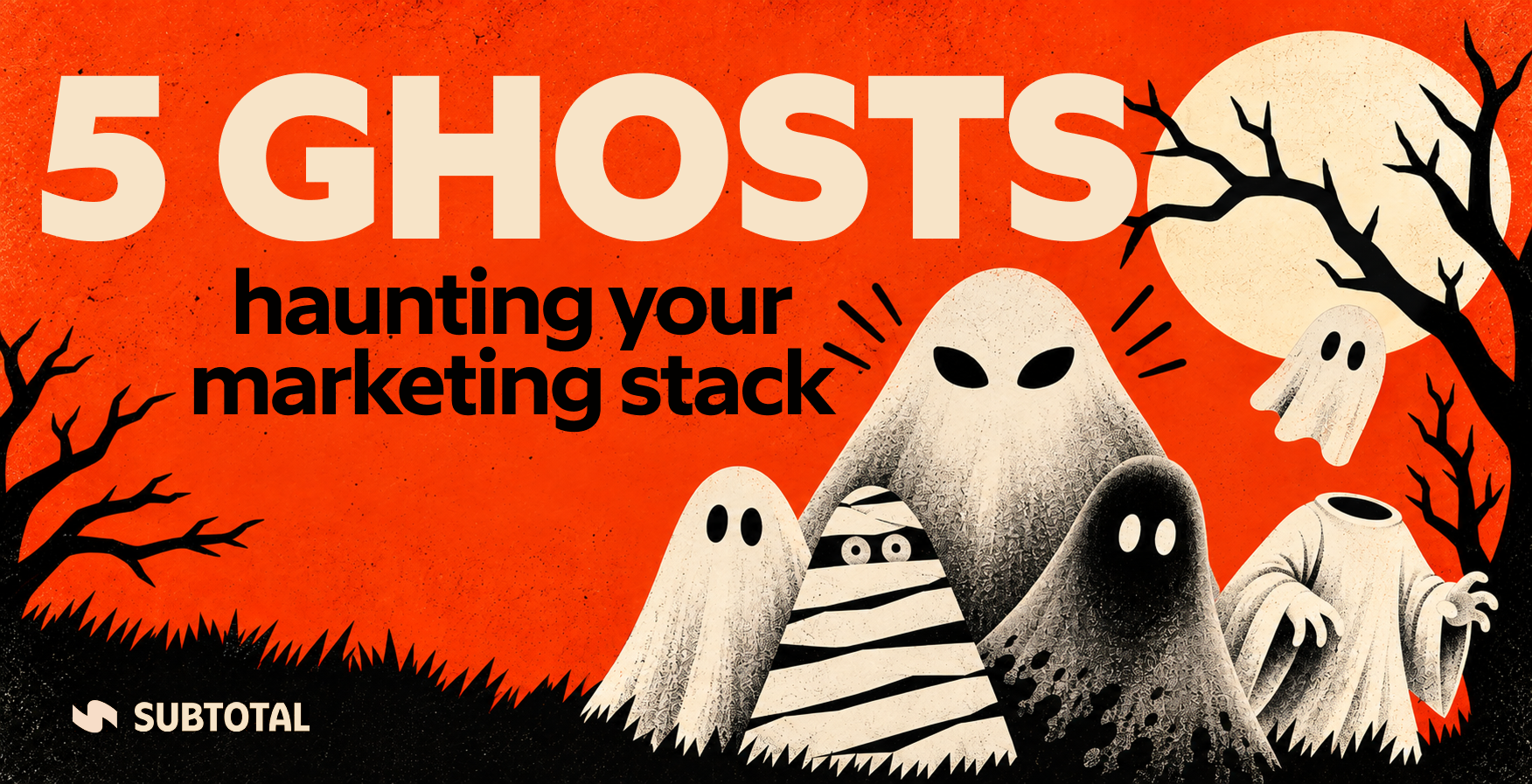
That gap leaks into every part of your marketing stack: who you email, who you target, and how you measure. If your retail sales don't show up in your data, something's lurking. Here are the five ghosts we see most often.
1. The Ghost Customer
She buys your product every month at Target. Online, you have no idea she exists. She has no profile, no purchase history, and you can't reach her. You know her only as a line in a retailer sales report.
She's often one of your most loyal buyers, exactly who you'd want in your loyalty program or VIP segment. But because her purchases happen at a retailer, none of that reaches Klaviyo. She never gets a replenishment reminder or a thank-you for her tenth purchase. Your best customers might be the ones you can't see.
2. The Phantom Conversion
Your ad worked! The shopper saw it, went to Walmart, and bought it. Your campaign report shows nothing, so the sale happened but the credit went nowhere.
This ghost shows up at budget time. When your ad platform only sees on-site conversions, campaigns that drive real retail sales look like they underperformed, and the platform learns from a small, unrepresentative slice of your buyers. If you can't see the conversion, you can't defend the budget.
3. The Zombie Audience
You keep paying to retarget people who stopped buying months ago, and some of them never bought from you at all. Without real purchase data, your audiences are built on clicks and guesses.
Clicks and opens tell you someone was interested once, not whether they bought or when. Purchase data lets you suppress people who already converted, send win-back flows to people who've lapsed, and stop spending on shoppers who already left.
4. The Poltergeist Attribution
Last-click attribution gives one touchpoint the credit and throws everything else out. Your upper-funnel work looks like it did nothing, and the channel that happened to come last gets all the credit.
Retail makes this worse. When the purchase happens at a retailer, there often isn't a "last click" on your side at all, so the model credits whatever online touchpoint it can find. One click shouldn't get credit for the whole journey.
5. The Headless ROAS
You're reporting return on ad spend, but the "return" stops at your own site, or at whatever slice of sales a single retail media network reports back. If most of your sales happen at retail, that ROAS is measuring only part of what your ads did.
A campaign with a "low" ROAS might be driving real lift at Kroger and Costco that never makes it into the calculation. Spend without a tie to sales is just spend.
Find your ghost customers before Black Friday
Black Friday is November 27. Over the next few weeks, holiday budgets get locked in, audiences get built, and email calendars fill up. Ghost customers you haven't found by then will sit out your biggest selling season.
Timing matters for another reason: Subtotal Signal skips purchases more than seven days old, so there's no backfilling later. The sooner shoppers connect, the more of their holiday buying your tools will see. Here's where to start:
- Give shoppers a reason to link their retailer accounts, such as loyalty points or rewards for retail purchases, and promote it in your pre-holiday emails, social, and ads.
- Put retail purchases into Klaviyo and build segments and flows around them (replenishment, VIP, and win-back), then use those segments to plan your BFCM offers.
- Build holiday audiences on actual buyers by seeding lookalikes with your retail buyers and excluding recent buyers from acquisition campaigns.
- Measure holiday campaigns against retail sales by sending retail purchases to your ad platform before campaigns launch, so you have a baseline when Black Friday results come in.
Bringing the ghosts back to life
All five ghosts come from the same place: your marketing stack can't see what shoppers buy at retail. When shoppers link their retailer accounts to your brand, Subtotal's Klaviyo integration turns their purchases into events, segments, and flows, and Subtotal Signal sends eligible purchases to your ad platform as conversion events, starting with Meta.
If you want your retail buyers to count this holiday season, start with the Subtotal Signal docs and the Klaviyo integration guide.
Sources: U.S. Census Bureau, Quarterly Retail E-Commerce Sales, via FRED (seasonally adjusted, Q2 2026); NielsenIQ; EMARKETER.